FESTIVALS AND EVENTS

The Naadam Festival
Naadam (meaning 'holiday' or 'festival') has its roots in the nomad assemblies and hunting extravaganzas of the Mongol armies. Even today, Chinggis Khaan's nine banners, representing the nine tribes of the Mongols, are ceremonially transported from Government House to Naadam Stadium to open the festivities. The communists renamed the festival People's Revolution Day and fixed it to July 11 to 13, on the anniversary of the Mongolian Revolution of 1921...

The Ice Festival
Every year, on the southern edge of the Siberian forest, the Blue Pearl of Mongolia – Lake Khovsgol – freezes over. The ice forms to a depth of five foot creating an extraordinary winter playground. The nomadic reindeer herders from the north, the Tsaatan, join local residents to celebrate the winter, with traditional games and races over two days in temperatures of up to -35 degrees. The festival consists of exciting activities and performances like Ice creation competition, Ceremony of offering of Ikh Khaan Saridag and Dalai Eej. (Shaman Ceremony), Concert by actresses from the Music & Drama Theatre, Caribou sleigh event , Competition of horse sledding and reindeer sledding on ice of lake, Competition of driving jeep on ice, skating, fishing and lots of games. Thus, it is held between 28th of February and 3rd of March annually.

The "White Moon" Mongolian Lunar New Year
White Month traditional new year is celebrated in many cases in February, exact date is calculated according to the lunar calendar. White month celebration source is connected to the celebration of Thanksgiving Day celebrated until XIII century in autumn. Chinggis Khan decided to celebrate it in the spring and called White month. The white color is symbol of all that is beneficial, purity and frankness. The popular form of this festival includes a series of deeply symbolic rituals that must be carried out in strict observance of the rules to ensure a happy and favorable year. The New Year’s Eve is called Bituun and each family takes feast in the Eve day. The feast meals are steamed whole meat of sheep, dumplings, tea with milk, bakeries and milk products. On the first day of spring White month women offer a milk tea or milk to the blue sky asking for the good luck for their family. Before the sun rises, men and boys go to the nearest or sacred mountain peak and offer 3 stones to the ovoo (pile of stone) as a gift to the god of nature and blue sky, consequently, when the sun rises they greet with sun as shouting in loud voice as Uuhai and Uuhai (meaning is Hooray). Then they come back to their homes and all people start to greet with each other as holding blue silk scarf called khadag, which is a symbol of respect. The greetings are expressed through very specific ritual gestures and mutual salutations. However, this greeting is not used between husband and wife. Once the ritual greetings are done, parents say a blessing and express good wishes to all family members and guests.
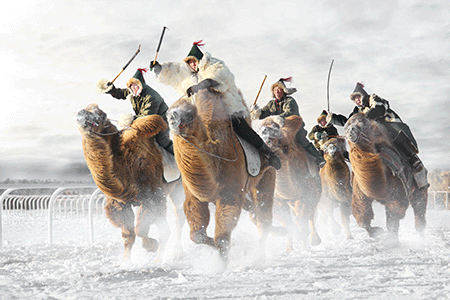
The Camel Festival
Gobi desert people happily organize and participate in Bactrian Camel Festival in February each year. This extra-ordinary festival allows travelers a rare opportunity to interact with and learn first-hand about Bactrian camels and camel herder nomads' lifestyle. Highlights of the festival include camel racing of more than 1000 camels, performances by traditional Mongolian musicians and dancers, competition of gorgeous nomad spouse on horseback of beautifully dressed camel.

Eagle Hunting Festival
One of spectacular customs of Kazakh people is hunting with specially trained eagles as well as they are renowned for their unique and extraordinary skill in using Golden Eagle to hunt small prey. This festival held in Bayan Olgii province at the heart of the majestic Altai Mountains, in western remote part of Mongolia. The festival displays the pride of Kazakh best hunters and their skill as hunters with eagle. After the festival you can have chance to discover pictures of glacier, high rocky mountains and beautiful lakes and ancient rock paintings.